Showing posts with label Quince and Co.. Show all posts

Monday, April 23, 2012

Favorite Thing - Yarn Shade Cards


Choosing yarn for a new project is a fun part of knitting, and to have a successful project it's important when choosing yarn to know as much as possible about it - the fiber content, the weight, the ply, the color range, and so many other things. 

Some of these questions can be answered by reading a catalog or website description. For more information on how to decipher yarn labels, see the Craft Yarn Council's website or check out Lion Brand's label reading tutorial.
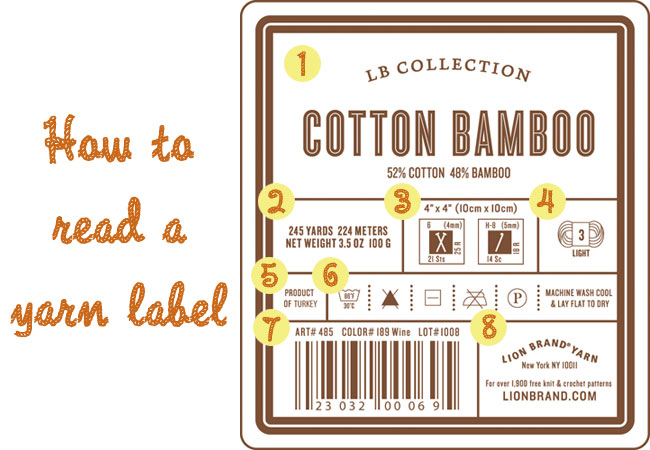

Reading up is terrific, but for most of the knitters and crocheters I know, the way a yarn looks and feels in person is an essential factor in making a final decision. 

I always look first to my local yarn shops for yarn purchases, but sometimes I'd like to try something not carried locally and this is where one of my favorite things - shade cards - come in handy. Most small companies offer these cards, with yarn swatches from their full range of colors, allowing you to see and feel the yarn before purchasing.

Brooklyn Tweed offers a virtual shade card you can download from their website


but for reasons stated above, I like the tangible version, such as the card (shown in the first photo at the top of the post) featuring their Shelter line, with several pieces of yarn affixed to the card. The gorgeous yarn palette really stands out against the white background. 

Brooklyn Tweed now offers shade cards that include colors for both Shelter and for their new Loft line.

My Quince & Co. Lark tri-fold shade card arrived neatly packaged,


enclosing swatches with small tails left free to allow you to move the yarn.


Some cards offer generous lengths for experimentation, like those featuring lovely Irish tweeds from Blackwater Abbey's Worsted line. This is especially helpful for moving colors around to compare and contrast them when planning color work.


The only problem I can see with yarn shade cards is that now I want ALL the colors and must tame my yarn stashing temptation, lol!

I hope you have as much fun collecting the cards as I do. Thanks for stopping by today, and happy knitting!


yarn tutorial graphic via http://blog.lionbrand.com/2012/02/17/how-to-read-a-yarn-label/
brooklyn tweed graphic via http://www.brooklyntweed.net/BTShadeCard.jpg

Monday, December 12, 2011

New Bosc Scarf Knitting Pattern & Recipe


I've long been intrigued with the idea of trying to capture the delicate beauty and intricacy of Japanese-style knitting stitches in a simple, approachable way. A way that would be fun for experienced and newer knitters alike, especially those who love the look of these types of stitches but are perhaps a little unsure of trying something that may appear rather scary.

With this technical concept in mind, the idea for the design of my newest knitting pattern was begun, aesthetically inspired by the beauty of ripe pears, the most elegant of which, in my opinion, are the Bosc variety.


I love their gold, green and russet hues, graceful curving shapes, and sweet but subtle flavor. 

When I found Quince and Co. Lark worsted weight yarn and saw the rich "honey" colorway I knew I had a match for my project.


The 100% wool yarn is soft enough for a scarf, with excellent drape for a yarn of this sort, but the twist still has a nice amount of body to give structure to the stitch pattern and to the scarf itself as it drapes around the neck - all details that were important to me as I selected yarn for this design, the Bosc Scarf, available here on my blog or on my designer page at Ravelry.com.


The scarf's texture is created with very basic stitches. Simple increases and decreases as well as easy cables shape the lines into a semblance of a pear shape and leaves (although you might very well see tulips and that is OK too!), separated by vertical lines of rippling eyelets.

I knit all of the cables without a cable needle; many excellent videos and tutorials for this technique can be found on Youtube or in this video from Knittinghelp.com or on the Grumperina.com or  Knitting Daily websites.

Lace ends grow organically into and out of Bosc's main stitch pattern, so the project is knit straight through from cast on to bind off with no grafting or provisional cast on necessary. The ends can be blocked either straight across or into a scalloped shape as I have done in the example here. 


A sleek corded edge is built into the knitting by slipping stitches as you go. This small detail keeps an elaborate stitch combination modern and un-cluttered (I love lace and cables but wanted to avoid a fussy look).  


Large charts as well as written instructions are included, and tips for adapting the length are given, offering multiple options for knitters.

The entire project began late last summer just as the pears were coming into season and I began experimenting with recipes for this fruit. Bosc pears are excellent for cooking as they retain much of their shape and flavor when baked or poached, although many other varieties cook nicely as well. 

One of my favorite pear dishes poaches the fruit in champagne with vanilla, and I hope you will give them a try and see just how lovely they can be.


Champagne Poached Vanilla Pears


Ingredients 
1 bottle champagne (any sparkling wine will suffice, or non-alcoholic version if you prefer) 
1 cup sugar (or sugar substitute)
1/4 tsp. lemon zest 
1  4" vanilla bean - split lengthwise
2 firm Bosc pears - peeled but with stems intact (slightly underripe is ideal)
Optional garnishes - dark chocolate, star anise, bay leaves

Directions
In a saucepan just large enough to hold pears and liquid, combine first four ingredients. Bring to a boil, immediately reduce to a simmer. Gently lower pears into the simmering liquid until fully submerged.

Cover pan and simmer for 15 minutes, baste with liquid occasionally, avoid stirring. Finished pears should be tender and easily pierced with a fork; very firm pears may need up to an additional 5-15 minutes of cooking time. Allow to cool in liquid for at least 20-30 minutes before serving.

Pears may be served immediately, or wrapped tightly and stored in the refrigerator for up to three days. To serve, place a single pear upright on a small plate, spoon a small amount of liquid over pear. I love to garnish these pears with small squares of extra dark chocolate, or for a festive look try adding a star anise and a single bay leaf, if desired.


I hope you enjoy making this recipe, it is a light, but delicious, dish to keep in mind with Christmas and New Year's celebrations approaching. If you decide to make either the scarf or the pears, I'd love to know!

Bon appétit and happy knitting!


Tuesday, November 15, 2011

Pattern Inspiration and Quince & Co. Lark Yarn Review


This autumn's harvest brought a bounty of delicious fruits and vegetables - enough inspiration to fuel the imagination of any epicure for months to come. But even before they delighted my taste buds, I found these pears were a treat for the eye.


I love their silhouette, proportions, and rich tones of green and gold tinged with a subtle hint of russet.The attributes of these gorgeous pears inspired some of the ideas I had when working out the stitch pattern and carried over even to choosing yarn for a pattern design. After much consideration chose Quince & Co.'s Lark yarn. basket photo Quinceandco.com


Lark is a beautiful, reasonably priced, American-spun, worsted weight yarn plied with enough air to give it a slightly woolly texture and just enough cushion to soften the look and feel of the stitches (while not losing definition in a sculptural stitch pattern like the one I designed for this project).


Available in lovely solid colors, Quince & Co. has recently added a few heathers to Lark's range as well. Shade cards can be ordered from the Quince & Co. website.


I knit up several variations of the new designs, tweaking them until they captured what I had in mind, and the first pattern to be ready for test-knitting is a scarf. The scarf's texture is formed mainly by simple lace and cable stitches that look difficult but are actually easy and fairly fast to knit.


Lark stood up well to repeated frogging and re-knitting, even considering the constant manipulation of stitches required when working cables and lace, and just felt wonderful to knit with. I look forward to trying the other yarns in the Quince & Co. lineup!

That's it for now, I'm still knitting away on the next item in the set. The scarf should be ready for publication sometime in December.